
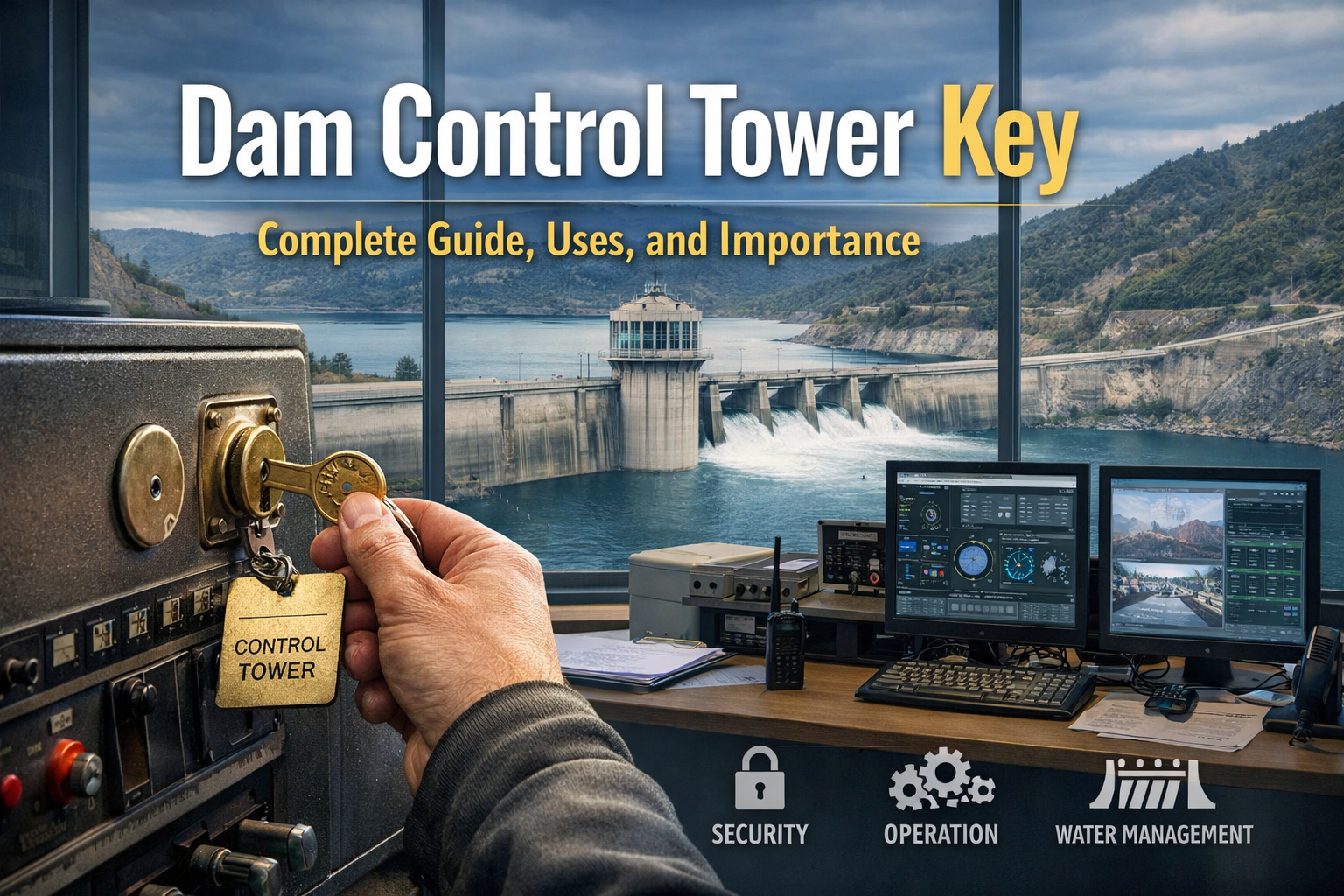

The keyword dam control tower key might sound technical at first, but once you break it down, it becomes a fascinating topic tied closely to infrastructure, safety, and engineering. Imagine standing near a massive dam, watching water flow with controlled precision—behind that control lies a system of mechanisms, and one crucial element is access control. That’s where this key concept comes into play. It’s not just about unlocking a door; it’s about controlling access to one of the most critical areas in a dam system.
Think about it like the key to a vault, except instead of money, it safeguards water resources, energy systems, and sometimes even entire communities. Without proper access control, the risks would be enormous. That’s why understanding this topic isn’t just useful for engineers—it’s valuable for anyone curious about how large-scale infrastructure operates behind the scenes.
Why This Key Is Important
When discussing dam control tower key, its importance becomes immediately clear. Control towers are the brain of dam operations, managing water levels, pressure, and flow rates. Access to these towers must be strictly controlled, and that’s exactly what this key ensures.
If you think about it, allowing unrestricted access would be like leaving the cockpit of an airplane open to everyone. The consequences could be disastrous. This key represents authority, responsibility, and security all in one. It ensures that only trained personnel can enter and operate sensitive systems, protecting both the structure and the people who rely on it.
What Is a Dam Control Tower Key
Basic Definition
At its core, a dam control tower key is a specialized access tool used to enter and operate the control tower of a dam. This can be a physical key, a coded device, or even a digital authentication system, depending on the level of modernization.
It’s not just about opening doors—it often integrates with control panels, safety locks, and restricted systems. In many cases, the key is part of a broader access control system designed to prevent unauthorized entry. This makes it a critical component in maintaining the integrity of dam operations.
Where It Is Used
The use of dam control tower key extends beyond just entry points. It is often required to access:
- Control rooms
- Mechanical systems
- Emergency shut-off panels
- Monitoring equipment
Each of these areas plays a vital role in managing water flow and ensuring structural stability. Without proper access control, the entire system could be compromised.
Structure of a Dam Control Tower
Components of the Tower
To fully understand the role of a dam control tower key, you need to visualize the control tower itself. These towers are typically tall structures located within or adjacent to the dam, housing critical equipment. Inside, you’ll find control panels, monitoring systems, and mechanical components that regulate water flow.
The tower acts as a command center. Every decision—whether to release water or hold it—is executed from here. That’s why access must be tightly controlled.
Role of Access Systems
Access systems are where the dam control tower key becomes essential. These systems ensure that only authorized personnel can enter specific areas. In older dams, this might involve traditional locks and keys. In modern setups, it could include biometric scanners or digital keycards.
The key acts as the first layer of defense. It’s the gatekeeper that prevents unauthorized access and ensures that only trained professionals can operate the systems inside.
Importance of Dam Control Tower Key
Security Reasons
Security is one of the biggest reasons why the dam control tower key is so important. Dams are considered critical infrastructure, and any unauthorized access could lead to serious consequences. This includes not just accidental damage but also potential sabotage.
By restricting access, the key helps maintain safety and stability. It ensures that only qualified individuals can interact with sensitive systems.
Operational Efficiency
Beyond security, the dam control tower key also contributes to operational efficiency. When access is well-managed, it reduces confusion and prevents unauthorized interference. This allows engineers and operators to focus on their tasks without worrying about disruptions.
In a way, it creates a controlled environment where everything runs smoothly and predictably.
How Dam Control Tower Key Works
Access Mechanism
The working mechanism of a dam control tower key depends on the type of system in place. In traditional setups, it involves a physical key that unlocks doors and panels. In modern systems, it might involve digital authentication, such as keycards or passcodes.
The key often works in combination with other security measures, creating a multi-layered defense system. This ensures that even if one layer fails, others remain in place.
Safety Features
Safety features are a crucial part of the dam control tower key system. These may include:
- Restricted access levels
- Time-based entry permissions
- Emergency override functions
These features ensure that access is not only controlled but also adaptable to different situations.
Types of Dam Control Tower Keys
Manual Keys
Manual keys are the most basic form of dam control tower key. They are simple, reliable, and easy to use. However, they lack the advanced security features of modern systems.
Digital and Smart Keys
Digital keys represent the future of dam control tower key systems. These include smart cards, biometric systems, and encrypted access codes. They offer higher security and greater flexibility, making them ideal for modern infrastructure.
Applications in Real Life
Water Management
In water management, the dam control tower key plays a crucial role. It ensures that only authorized personnel can control water flow, preventing accidents and maintaining balance.
Emergency Situations
During emergencies, quick access is essential. The dam control tower key allows operators to respond بسرعة, whether it’s releasing water to prevent overflow or shutting down systems to avoid damage.
Advantages and Limitations
Benefits
The benefits of a dam control tower key include improved security, better control, and enhanced operational efficiency. It acts as a safeguard for both infrastructure and people.
Challenges
However, there are challenges. Lost keys, system failures, or outdated technology can create risks. That’s why regular updates and maintenance are essential.
Future of Dam Control Systems
Automation Trends
Automation is changing how dam control tower key systems work. Digital access, remote monitoring, and AI-driven controls are becoming more common.
Smart Infrastructure
Smart infrastructure is the future. The dam control tower key will likely evolve into fully integrated digital systems that offer real-time monitoring and enhanced security.
Conclusion
The concept of a dam control tower key goes far beyond a simple tool—it represents security, control, and responsibility. From managing water flow to protecting critical infrastructure, its role is essential. As technology advances, these systems will only become more sophisticated, ensuring safer and more efficient operations for years to come.
FAQs About Dam Control Tower Key
What is a dam control tower key used for?
It is used to control access to critical areas within a dam’s control tower.
Is dam control tower key always physical?
No, it can also be digital or biometric in modern systems.
Why is dam control tower key important?
It ensures security and prevents unauthorized access to sensitive systems.
Can dam control tower key systems fail?
Yes, like any system, they require maintenance and updates.
What is the future of dam control tower key?
It is moving toward smart, automated, and digital access systems.